Method
Grass is tricky. No one has the time to paint every blade. Distance takes care of most of the problem, but the foreground needs something that says field rather than snooker table. And so are born a thousand methods for implying grass, which get repeated across the picture resulting in something that looks like an exercise in technique.
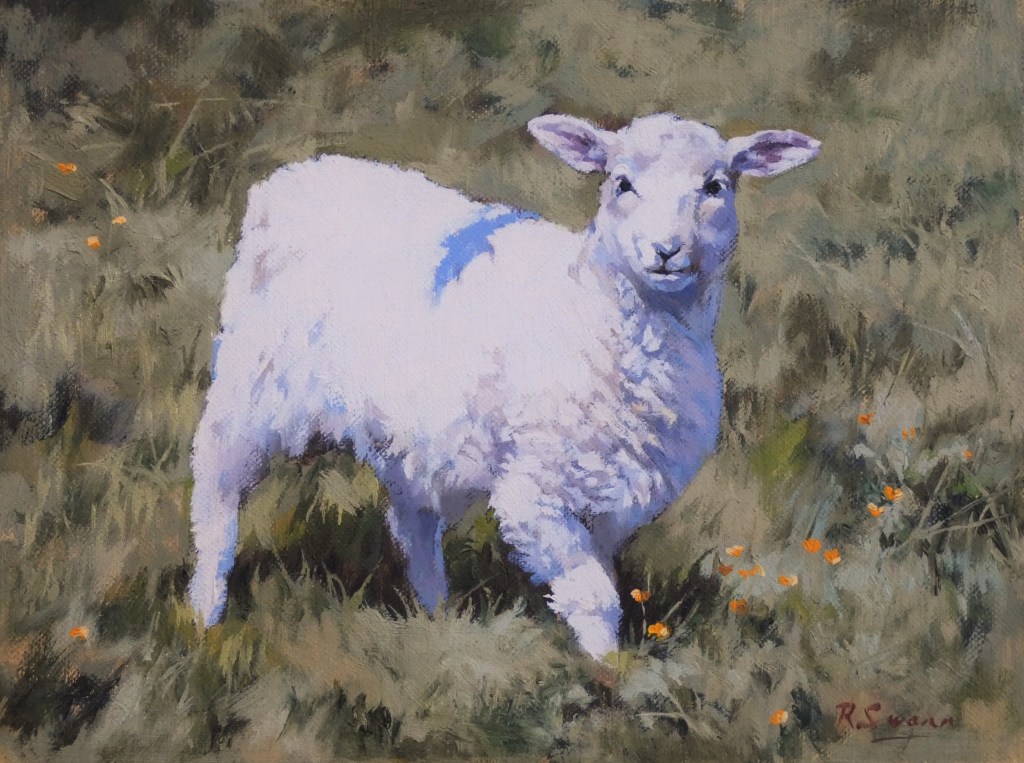
In the image below there’s a lot of ‘my method for painting grass’ used – three tones, shadow / mid-tone / highlight layered over each other, the introduction of occasional patches of slightly different colour, patches of flat colour fringed with individual grass blades to imply the whole lot is equally textured, etc. The degree to which it works depends on observation and concentration. Which is a pain, because who wants to spend time looking at grass, or expending as much effort on painting it as on the subject of the image? I was hoping a palate of terre verte, araratskaya green, yellow ochre pale, Italian black roman earth and warm white would do all the work for me. But no, you have to look at the stuff, and put dark where the dark bits are and light where the light bits are.
The astute observer will also have noticed another trick used, the introduction of a farm animal, which distracts attention from the foliage debacle. And obscures a lot of grass.
 RICHARD SWANN ART